
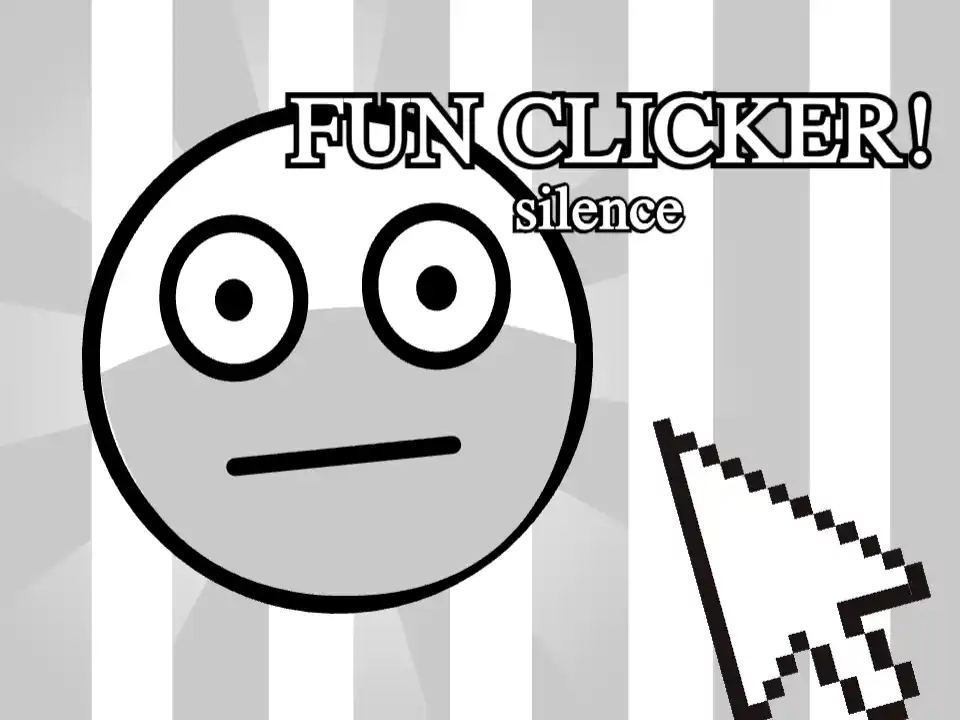
Fun Clicker - by Voidder
New Games

Trending Games
![Kick the Buddy but Durple [Sprunki - Beat Up Durple]](https://game.sprunkiretake.net/kick-the-buddy-but-durple.webp)
Popular Games
Comments
Sprunki Categories
Fun Clicker Updated!!!
- New Skins Updated
- Click the green happy guy to earn clicks
- Buy upgrades to speed up the amount of clicks you can get.
- Progress and unlock more skins
- Reach the end for a reward!!
About Fun Clicker: The Scratch Horror Game That Deceives You
At first glance, Fun Clicker appears to be exactly what it says on the tin: a generic, brightly colored clicking simulator hosted on Scratch. You click a happy green face, watch numbers go up, and buy upgrades. However, players who stick around long enough discover that this "innocent" browser game is actually a psychological horror experience in disguise. Created by the developer Voidder, Fun Clicker has gained viral attention for its unsettling progression and unexpected jump scares.
In this guide, we dive deep into the lore, mechanics, and terrifying transformation of the Fun Clicker entity, explaining why this simple Scratch project is keeping players on the edge of their seats.
The Deceptive Premise
The game starts with a generic title screen featuring a "Friendly" background and a large "Play" button. When you enter the game, you are greeted by a large, smiling green circle with googly eyes. The objective seems standard: click the face to earn currency (Clicks) and visit the Shop to buy upgrades like "+1 Click" or auto-clickers.
However, the true premise of Fun Clicker isn't about getting a high score—it's about torment. As you click the character, you aren't just earning points; you are irritating a dormant entity. The "Happy Green Guy" is a mask for something much darker, and your interactions slowly peel away its friendly facade to reveal the monster underneath.
Gameplay Mechanics: The Grind to Horror
The gameplay loop is intentionally simple, perhaps even tedious, to lull the player into a false sense of security.
Core Controls
- Clicking: You click the main character in the center of the screen.
- Shop: A side menu allows you to spend your clicks on upgrades.
- Currency: "Clicks" serve as money.
The Shop Items
The shop contains standard items, but their costs and descriptions hint at the game's true nature:
- +1 Click (Cost: 25): Increases manual click power.
- +20 Click (Cost: 250): A significant boost to manual clicking.
- +100 Click (Cost: 1,000): Accelerates the rage accumulation.
- +1 Slave (Cost: 1,000 - 1,500): A strangely named auto-clicker that hints at the darker tone.
- End Game (Cost: 50,000): The final button. This doesn't win the game in the traditional sense; it triggers the ultimate horror sequence.
Character Guide: The 10 Stages of Rage
The heart of Fun Clicker is the evolving face of the protagonist. As you accumulate clicks and buy upgrades, the character sprite changes. It doesn't just get cooler; it gets visibly distressed and angry.
Phase 1: The Masquerade
- Stage 1 (Green Happy): A perfectly round green circle with a wide, innocent smile. This is the "trap" to lure you in.
- Stage 2 (Slightly Sad): The mouth is squeezed slightly. The smile fades.
- Stage 3 (Yellow Sad): The character turns yellow. The expression is now clearly unhappy, signaling that your clicking is hurting it.
Phase 2: The Agitation
- Stage 4 (Orange Annoyed): The color shifts to orange. The eyes widen in disbelief.
- Stage 5 (Eyebrows Appeared): Angry eyebrows are added. The entity is no longer sad; it is becoming hostile.
- Stage 6 (Red Fury): The character turns deep red. The mouth is a flat line of pure rage. At this point, the background music often feels too slow for the intensity of the visual.
Phase 3: The Horror Reveal
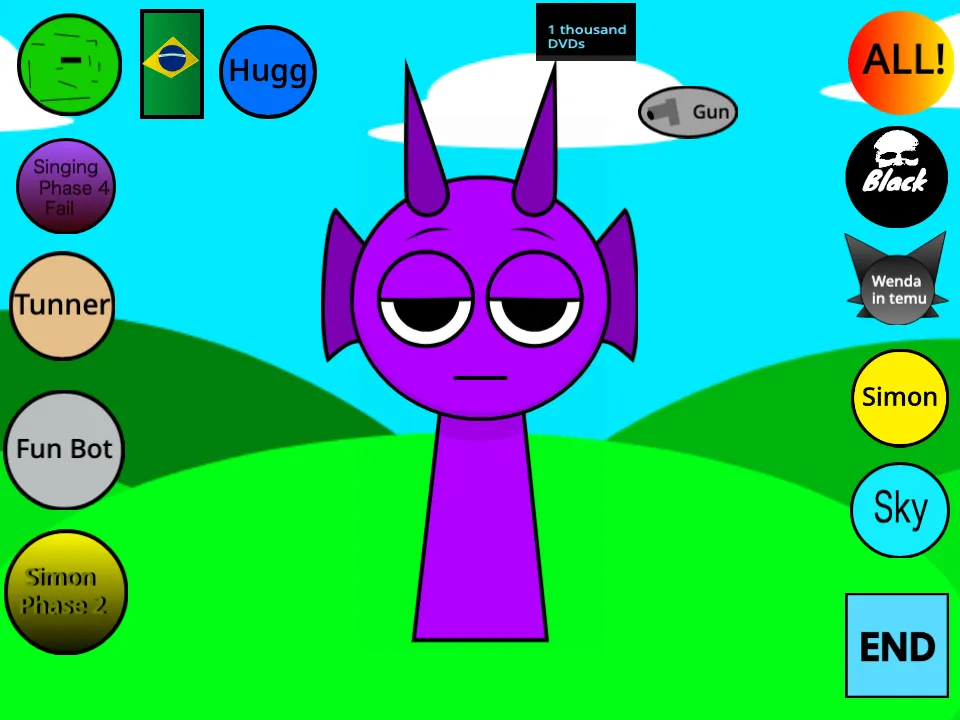
- Stage 7 (Purple Scream): The face turns purple/violet. The mouth opens into a scream, and the pupils shrink.
- Stage 8 (Shadow Fear): The colors darken. The eyes become small white dots in a dark void, suggesting the entity is scared of what it is becoming.
- Stage 9 (The Smile Returns): A twisted, scary version of the original smile returns. The mouth is now black with sharp edges.
- Stage 10 (The Void Entity): The character becomes a black void with realistic, sharp teeth and glowing white eyes. It is no longer a Scratch sprite; it is a monster staring back at you.
Exploring the Genre of "Hidden Horror"
The success of Fun Clicker lies in its subversion of expectations. It belongs to a niche genre of "Troll Games" or "Meta-Horror," where the software pretends to be one thing while hiding another. If you enjoy uncovering hidden secrets in seemingly normal web games, you are likely a fan of this emerging trend in browser-based gaming.
For those who are looking for more games that break the fourth wall or offer unique browser experiences, you might want to explore other categories. If you enjoy fixing characters or exploring strange modifications, check out the Browser Games category for a wider selection of creative and sometimes spooky web experiences.
Fun Clicker specifically uses the "Scratch" aesthetic—thick outlines, vector art, and bright colors—to disarm the player. This contrast makes the eventual shift to realistic teeth and jump scares much more effective.
The Ending: What Happens When You "End Game"?
The ultimate goal for players is to afford the "End Game" button in the shop, which costs 50,000 clicks. Reaching this amount requires patience and buying enough "Slave" upgrades to automate the process.
Once you purchase the final upgrade:
- The Countdown: The screen may fade or pause briefly.
- The Transformation: The Stage 10 Void Entity takes over the screen.
- The Jump Scare: A loud, distorted scream plays (often "The Smile" jump scare audio or similar stock horror sounds).
- The Crash: The game cuts to black or shows a "Void" screen with a simple smiley face, mocking the player for their effort.
The ending implies that by clicking, you have fed the monster enough energy to break free from the game, or you have simply destroyed the "Fun" simulation entirely.
Tips and Strategy
If you want to experience the horror yourself without clicking your mouse 50,000 times manually, here are a few strategies:
- Prioritize Auto-Clickers: Buy the "Slave" upgrades as soon as possible. Since the goal is a high number, passive income is key.
- Don't Overspend on Click Power: Once you have a steady stream of auto-clicks, stop buying "+1 Click" upgrades. Save your currency for the big 50k purchase.
- Mute Your Audio (Initially): The repetitive music can be annoying, but turn it back on when you are nearing 50,000 clicks to experience the full effect of the jump scare.
- Watch the Eyes: The changes in the character's eyes are subtle indicators of when the phase is shifting.
Community Trends and "Voidder"
The game owes its popularity to the creator, Voidder, who documented the creation process on YouTube. In a video titled similar to "I hid a horror game in a normal scratch game," Voidder explains the thought process behind every asset.
- The "Scratched" Look: The intentional use of the "delete the scratch cat" meme and basic circle tools was a design choice to make the game feel amateur and harmless.
- The Economy: The pricing of items was speed-run by the developer to ensure players could reach the end within a reasonable time (10-15 minutes) to avoid them quitting before the scare.
- The Easter Egg: The Discord community for Voidder often hunts for other hidden horror elements in his projects, making Fun Clicker a gateway into a larger "Void" lore.
Conclusion
Fun Clicker is a masterclass in minimalism. It proves that you don't need high-end graphics or complex code to scare people; you just need to subvert their expectations. By taking the most boring genre in gaming—the idle clicker—and injecting it with a dose of nightmare fuel, Voidder created a memorable experience that reminds us never to trust a happy green face on the internet.
If you are brave enough, head over to Scratch, search for Fun Clicker, and see if you can endure the stare of the Void Entity. Just remember: the more you click, the angrier it gets.